Get 10% off at checkout Just request your voucher at checkout 60:00
+49 69 95209894 Mon–Fri 9am–6pm Secure payment
Food & Hospitality

When people see your food, they want to taste it.

Few industries have it as easy and as hard online as hospitality. Easy, because food is sensory, emotional and shareable by nature – a steaming plate, a crisp cut, a latte with perfect foam stop the thumb all on their own. Hard, because everyone in your city is trying exactly the same thing and people are flooded with hundreds of food images every day. Among all these stimuli it is not the restaurant with the biggest budget that wins, but the one with the clearest signature, the most honest atmosphere and the smartest connection to real people who speak on your behalf. This guide shows you step by step how to turn appetite into real reach, how to build content collaborations with the right creators, and how one-time guests become a loyal community that returns and recommends you. No bluff, no empty promises – only practical strategies that build genuine, organic growth.

Start growing today

The right creators, not big names

We bring your kitchen together with real people whose community truly matches your offer and region – for recommendations that feel credible and bring real guests.

Local visibility in focus

Instead of reach somewhere, we focus on people in your catchment area who can stand at your door tonight – where visibility turns into real revenue.

Honest, organic growth

No empty promises and no tricks, but genuine connections, honest recommendations and a loyal community that returns and recommends you out of conviction.

01

Appetizing visuals as your foundation

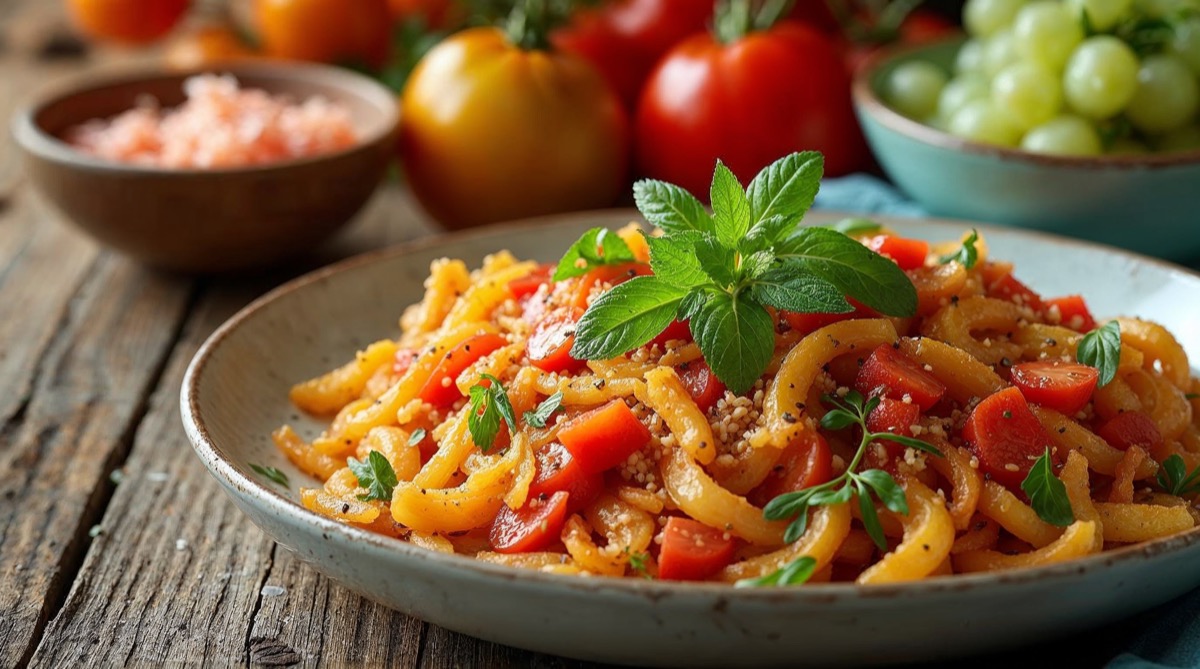
Today the first bite happens with the eyes, long before anyone walks through your door. That is why the quality of your images is not a side note but the foundation of every further strategy. People scroll past thousands of motifs in fractions of a second – only an image that triggers real hunger stops them. This does not mean you need an expensive production. It means you understand the rules by which food looks appetizing: warm, soft light instead of cold ceiling light, a clear focal point, texture, steam, freshness and honest colors that match the real plate.

Natural daylight at the window is your best and cheapest friend. Shoot around noon or early afternoon when light comes in from the side and creates structure – that is how a sauce shines, how a burger casts shadows, how you see the cheese pull. Avoid harsh overhead midday sun and the glaring neon of the kitchen, which makes every dish pale and lifeless. A simple trick: a white sheet of paper or a napkin on the shadow side as a reflector, and suddenly your plate looks like a magazine spread. Position the dish so the freshest, most colorful components face the front.

Develop a recognizable look instead of editing every image differently. A consistent visual style – the same editing, the same surface aesthetic, the same color temperature – makes your profile feel like a brand rather than a random folder. When someone visits your account, they should understand in three seconds what you stand for: rustic and hearty, minimalist and refined, colorful and playful. This visual signature is what makes you unmistakable when your image appears next to ten other restaurants in the same neighborhood.

Do not forget the surroundings: hands passing a plate, a cut at the right moment, the clink of glasses in the background, the people at your tables. Food works strongest when it is told alive and in motion, not sterile on a white background. Such images sell not just a dish but a feeling – and feelings are the reason people choose your place over another and remember it.

02

Short video and food reels as your reach engine

If images awaken hunger, video makes it irresistible. No format conveys indulgence as well as moving footage: the cheese stretching, the sauce running over the steak, the first crackling cut of a crust, the sizzle on the hot pan. Short videos are also the format that currently earns the greatest organic reach, because platforms preferentially surface exactly these captivating clips consumable in seconds. For hospitality this is a gift – hardly any other industry naturally delivers so much visual drama.

The first second and a half decide everything. Do not start with a logo or a long intro, but with the strongest moment: the cut, the pour, the steam. Show the result at the beginning so the hook lands, and only afterwards tell the path there. Keep clips short, edit tightly and set a clear rhythm – every cut should be a small reward. Captions are mandatory, because many people watch without sound; good on-screen text guides through the video and explains in a few words what makes this special.

Think in series rather than single pieces. A recurring format – for example a new dish in preparation each week, a look behind the kitchen door, the story of an ingredient, or a team member presenting their favorite dish – gives people a reason to return and gives you a plannable structure. This way you do not have to invent a completely new concept every week, but fill a proven vessel with fresh content. Series also build familiarity, and familiarity is the precursor to sympathy and a visit.

Sound is half the battle. The sizzling, cracking and bubbling – these real kitchen sounds trigger physical reactions and keep people on the video longer. Combine them with calm, well-fitting music that matches your brand, and pay attention to current sounds the platform is currently favoring. But do not overdo it: an honest, well-lit phone video with clear sound beats any overproduced ad that looks like an ad. Authenticity is the most valuable currency in the food space.

03

Building local reach deliberately

A restaurant does not live on reach at the other end of the world, but on people who can come to your neighborhood tonight. That is why the most important question is not how many people see you, but which ones. A thousand interested people in your city are infinitely more valuable to your business than a hundred thousand curious ones somewhere who will never pass your door. Your entire strategy should account for this local focus – from language to motifs to the places you tag.

Consistently use the location in your posts and tag your neighborhood, your city and notable nearby places. When people search for food in their area or browse through location tags, you want to appear there. Weave natural local references into your texts – the weekly market around the corner, the neighborhood festival, the holiday celebrated where you are. Such signals make you relevant to the people who can actually come to you, and to the platforms that serve content by region.

Connect with other businesses nearby that are not direct competitors: the wine shop, the bakery, the gym, the flower shop, the cinema. Joint promotions, mutual mentions and shared content open the trusted circles of your neighbors – people who live exactly in your catchment area. A breakfast offer together with the bakery next door or a cinema menu with the movie house around the corner reaches real people with real proximity to your location and creates occasions worth talking about.

Also maintain your profile in map and search services, because many people decide spontaneously there where to go. Current opening hours, appetizing photos, the right category and honest replies to reviews ensure that a search turns into a visit. The most beautiful campaign fizzles out if someone finds you but sees the wrong hours or an empty profile. Local visibility is always a chain – and it is only as strong as its weakest link.

04

Setting up food creator collaborations the right way

The strongest lever for genuine growth in hospitality is collaborating with people whom others trust about food. A local food creator who authentically tells the story of your place brings you something no ad can buy: the honest recommendation of a real person to a community that trusts their taste. This is exactly where GrowAlta comes in – we bring your brand together with the right creators whose audience truly matches your offer and region, instead of simply chasing big numbers.

The decisive metric is not a creator’s reach but the fit. A creator with a smaller but engaged and regionally rooted community often brings you more real guests than a big name whose audience is scattered across the world. Watch three things: does the style match your brand, does the audience sit in your catchment area, and is the engagement genuine and alive? A good match does not feel like advertising to the community, but like a tip from a friend who knows where the good food is.

Give creators creative freedom instead of a rigid script. No one knows their audience better than the person themselves, and nothing feels forced faster than a creator obviously reciting prescribed lines. Invite them to truly experience your kitchen, share the story behind a dish, tell them about the origin of the ingredients or the idea behind the menu – and let them turn it into something in their own voice. State clearly what matters to you, but trust the signature that made people listen to the person in the first place.

Think in relationships rather than one-off actions. A single mention fades quickly, but a creator who honestly drops by again and again over months and becomes part of your story builds real trust. Recurring collaborations feel more credible because the community notices: this is not a paid one-day wonder, this is a place this person genuinely loves. Nurture these partnerships the way you nurture your best regulars – with appreciation, reliability and real interest in the people behind them.

05

Reviews and social proof as a bridge of trust

Before someone invests money and time in a restaurant visit, they look for confirmation that the decision is a good one. Other people provide this confirmation – in the form of experience reports, photos, mentions and honest assessments. Social proof is the invisible bridge between interest and visit: it lowers the perceived risk in the guest’s mind and turns curiosity into a decision. Those who deliberately build this bridge win guests who feel more secure and arrive with higher expectations and better spirits.

Actively but charmingly ask satisfied guests for their experience. The best moment is the contented moment after a good meal – a small card on the table, a friendly note from the team, a QR code on the bill. People like to share good experiences; they often just need a gentle nudge and an easy path. What matters is that you invite genuine experiences and never try to trick with invented voices – dishonesty is quickly seen through in the food space and, in the long run, always the loser.

Respond to every piece of feedback – the good as well as the critical. A warm, personal reply to praise shows all onlookers that real people stand behind the place who are genuinely glad. A calm, solution-oriented reply to criticism shows greatness and often persuades more than a hundred perfect reviews. Potential guests read above all how you handle problems. Those who take criticism seriously, say thank you and offer a solution turn a disappointed moment into a showcase for their service.

Make good social proof visible rather than hiding it. Share lovely guest experiences on your channels, highlight special moments and show the people who were your guests and share their joy. This creates a cycle: visible appreciation motivates more guests to share their experience, which in turn convinces new people. Trust is not a coincidence but the result of many small, honest signals that you deliberately cultivate and bring to the foreground.

06

Menu launches as a staged event

A new dish or a new menu is more than a kitchen process – it is an occasion worth talking about. Too many businesses simply pin a new dish quietly onto the board and wonder why no one notices. Yet a launch is the perfect opportunity to concentrate attention, awaken anticipation and give people a concrete reason to visit right now. Treat every novelty like a small premiere with a build-up, a climax and an afterglow.

Build tension before the start. Show tempting glimpses without revealing everything – an ingredient in close-up, a look over the chef’s shoulder, a mysterious hint of what is coming. Announce a date so people know when they can strike. This phase of anticipation is often more valuable than the launch itself, because it sparks conversations and turns passive observers into eager waiters. Those who feed the curiosity well already have a queue of attention on launch day.

Tell the story behind the dish at launch. Why now, where does the idea come from, which ingredient is special, who on the team developed it? People eat not only with their mouth but with their head and heart. A good story turns a plate into an experience worth sharing. A dish that only tastes good gets eaten; a dish that has a story gets recommended and passed on.

Connect the launch with your creator partners and your community. Invite fitting creators to experience the new dish first, and give your regulars the feeling of being allowed in before everyone knows it. An exclusive foretaste for the most loyal people rewards loyalty and generates exactly the first honest voices that carry a launch. This way a single new dish becomes a shared event that brings real reach and real visits.

07

Seasonal campaigns with a natural rhythm

Hospitality has a built-in calendar that hardly any other industry can use so strongly: the seasons, the festivals, the harvest moments, the holidays. Asparagus in spring, berries in summer, pumpkin in autumn, mulled wine and festive menus in winter – each of these moments is a natural occasion that already occupies people. Those who play this rhythm do not have to force attention but surf a wave that is there anyway. This makes seasonal content among the most efficient of all.

Plan ahead rather than reactively. The best seasonal campaign begins before the season reaches its peak, because anticipation is a powerful engine. Those who talk about their festive menu two weeks before the holiday are present in guests’ minds when they make their plans. Create an annual plan marking the important occasions of your region, and prepare content, offers and collaborations in good time. Those who arrive too late compete with everyone else for the same attention at the last moment.

Adapt not only the dish but the whole mood to the season. Colors, light, music, props and the language of your texts may let the change of season be felt – warm tones and candlelight in winter, fresh green and open windows in spring. This atmospheric adaptation works deeply, often without conscious perception, and makes your content appear alive and current. A place that breathes with the seasons always feels current to guests and never stale.

Use seasonal scarcity as an honest incentive. A dish that exists only as long as the ingredient is fresh has a natural expiry – and that gives people a real reason not to hesitate forever. This scarcity is not artificially created but lies in the nature of the matter, and that is exactly why it is credible. Communicate clearly how long something is available, and you give your guests a gentle, honest nudge to come now rather than someday.

08

Deliberately encouraging guest-created content

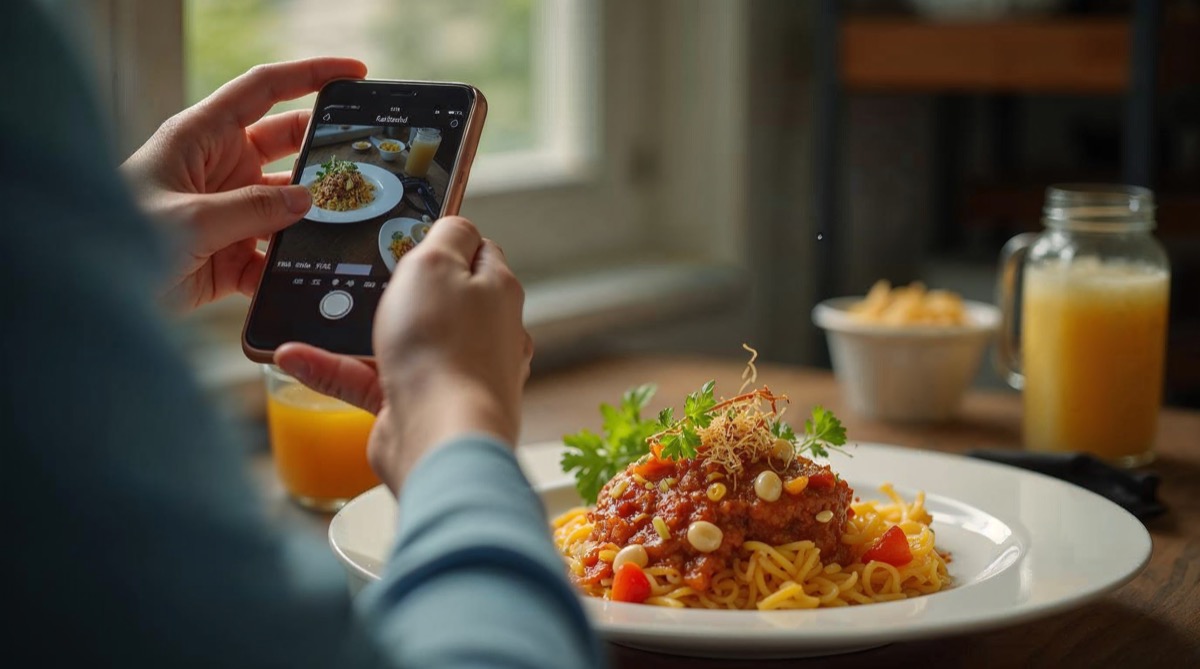
The most convincing content about your restaurant comes not from you but from your guests. When someone voluntarily shares a photo of your plate, it is an honest recommendation that feels a thousand times more credible than any beautiful shot of your own. Such guest-created content is free, endlessly varied and carries your brand into circles you could never reach yourself. The art lies not in forcing it, but in creating the conditions under which people want to share entirely on their own.

Deliberately design shareable moments into your experience. A dish served spectacularly, a particularly beautiful corner with good light, a surprising detail on the plate, a lovingly designed wall – such moments invite capturing. Ask yourself about everything you design: is this something a guest would proudly show? If your place offers visual highlights, you give people something to carry onward in their own words.

Honor and share what guests create about you. When someone captures a beautiful moment from your place, say thank you, react warmly and share it with permission on your own channels. This recognition feels like a small award to the person and motivates others to do the same. This creates a culture of sharing in which guests become proud ambassadors – not because you ask them, but because it feels good to be seen by a place you like.

Give people a simple, recognizable way to tag you. A memorable name, a consistent label, a clear location – the easier it is to link you, the more often it happens. Communicate in a friendly and casual way where to find you, without making it pushy. Over time you gather an ever-growing pool of genuine guest moments, which is your most credible advertising – created by people who speak for you because they truly mean it.

09

Building a real community

The difference between an interchangeable place and a favorite spot lies in the relationship with people. A restaurant that only sells food is replaceable; a restaurant to which people feel a genuine bond becomes their place, which they defend and recommend. Community is not a marketing trick but the sum of real warmth, recognition and the feeling of being welcome and seen. This bond forms both on site at the table and online on your channels – and both should feel the same.

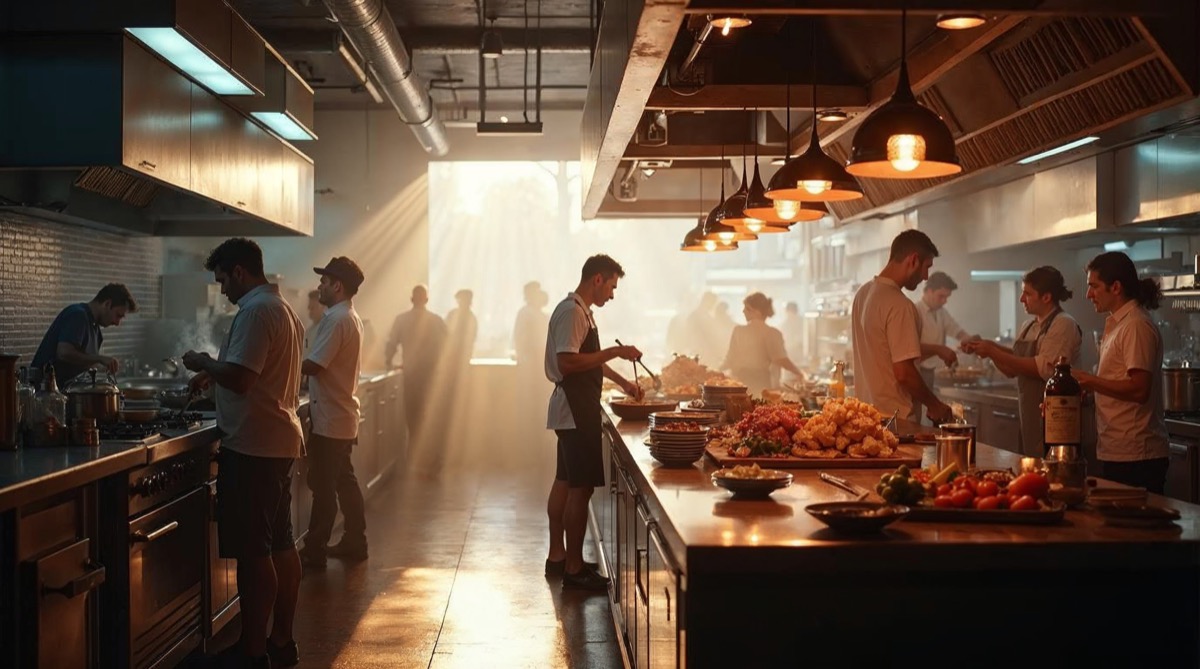
Show the people behind the food. A restaurant does not consist of plates but of cooks, service staff, the team at the counter, the suppliers and their stories. When you make these people visible – their signature, their humor, their everyday life – your guests connect not with an anonymous brand but with real personalities. People return for good food, but they become loyal because of the people who prepare and serve it. This human level is your strongest and least copyable advantage.

Have real conversations instead of one-way communication. Reply to comments and messages like a host, not like a machine – warm, personal, with humor. Ask questions, gather opinions on the next dish, celebrate the people who keep coming back. A channel where real dialogue takes place feels alive and draws more people in. Engagement is not a number you harvest but a conversation you hold – and the more you listen, the stronger the bond becomes.

Create occasions that bring people together. A regular evening with a special theme, a small celebration for an anniversary, an action where guests get to decide, a gathering for the most loyal regulars – such moments transform loose visitors into a connected community. When people do not just eat at your place but also meet others and belong, your place becomes more than a restaurant. This sense of belonging is the foundation for genuine, lasting growth that no campaign can replace.

10

Measure, learn and continuously optimize

In the end, gut feeling separates from strategy through one simple habit: looking at what really works. Many restaurateurs post into the blue for months without ever checking which content actually brings people into the place. Yet you do not have to be a data expert – it is enough to regularly observe a few meaningful signals and draw honest conclusions from them. Those who measure do not have to guess, and those who do not guess waste neither time nor attention on things that reach no one.

Focus on the signals that say something about real interest. How long do people watch a video, how often is a post saved or shared with others, how many write to you after a post, how many find you via search? Such signals show you what really moves people, instead of counting only surface attention. A post that many save to come by later is more valuable than one that is briefly liked and then forgotten.

Connect your online signals with what happens in the place. Casually ask new guests how they heard of you, observe whether there is more going on after a strong campaign, note which promoted dish is suddenly ordered more often. This bridge between screen and table is the most important metric of all, because it shows whether your content is not only liked but brings real guests and real revenue. Everything else is just a preliminary stage to this one goal.

Turn measuring into a calm, steady rhythm rather than a nervous chase for numbers. Take time once a month, for example, to look at your strongest and weakest content, and ask a simple question: what of this do I want to do more of, what less? Do not immediately discard everything that does not ignite at once, but double down on what demonstrably reaches people. Growth in hospitality is not a lightning bolt but a patient sum of small, clever adjustments – week by week, dish by dish, guest by guest.

Frequently asked questions

Do I need an expensive camera for good food content?

No. A modern smartphone is entirely sufficient for excellent results. Far more important than the technology are good, soft daylight at the window, a clean composition and a recognizable style. Those who understand the simple rules of food aesthetics get more out of a phone than someone using expensive equipment without a feel for it. Start with what you have and improve step by step.

How do I find the right creators for my restaurant?

The fit is decisive, not the size. Make sure the creator’s style and values match your brand, that their community truly sits in your region, and that engagement is genuine and alive. This is exactly where GrowAlta supports you: we bring you together with people whose audience actually matches your offer, instead of simply chasing big numbers. A good regional match often brings more guests than a big but mismatched name.

How often should I publish new content?

Consistency beats quantity. It is better to have a few really good posts in a reliable rhythm than many careless quick shots. Find a pace you can sustain long-term and stick with it. A recurring format takes a lot of pressure off, because you do not start from zero every time. More important than pure frequency is that every post has a reason to exist and conveys real appetite or real closeness.

How do I handle critical reviews?

Calmly, honestly and solution-oriented. Thank them for the feedback, take the concern seriously and, where possible, offer a solution. Potential guests read above all how you handle criticism – a composed, human reply often persuades more than a flawless record. Never become defensive or snippy. Those who see criticism as an opportunity turn a disappointed moment into a visible showcase for good service.

Is the effort worthwhile even for a small place or a delivery service?

Especially then. Small businesses often have the most personal story, the most direct relationship with their guests and the clearest signature – all of these are enormous strengths online. You do not compete with huge chains on budget, but win with closeness, character and genuine recommendations. A delivery service additionally benefits from appetizing content triggering the decision right at the screen, exactly where the order is placed.

How do I measure whether my effort really pays off?

Connect your online signals with what happens in the place. Watch saved and shared posts, messages and people who find you via search – and casually ask new guests how they heard of you. This bridge between screen and table shows you whether your content brings real guests. Once a month, calmly look at what worked best and do more of it.

Ready for real growth in your niche?

At its core, food marketing is an honest affair: people return because it tastes good, because they feel welcome and because other real people speak on your behalf. No trick in the world replaces good food and genuine hospitality – but the right strategy ensures that the people who fit you find you in the first place. When you combine appetizing visuals, honest video moments, smart local visibility and fitting creator collaborations into a coherent whole, genuine, organic growth that lasts emerges from it. GrowAlta helps you bring the right people to the table and turn appetite into a loyal community. Start with one step, stay with it, and let your food do the work – the rest comes on its own.

Start growing today